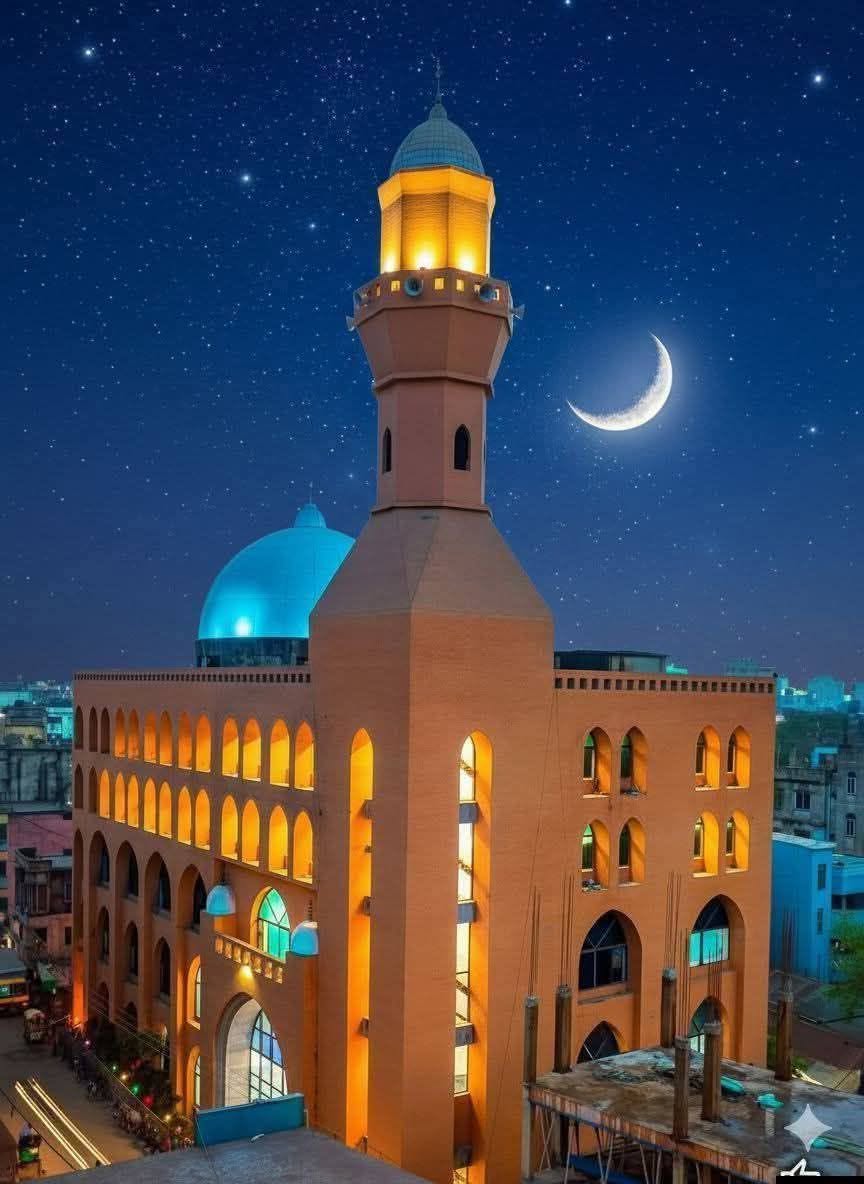
The illuminated minaret of Jamia Islamia Yunusia, Brahmanbaria, beneath a crescent moon
Heritage Archive · Brahmanbaria · since 1914

A century & more,
of the house of ʿilm.

A fact-checked, independent tribute to الجامعة الإسلامية اليونسية — Al-Jāmiʿah al-Islāmiyyah al-Yūnusiyyah of Brahmanbaria. Founded by Abu Taher Muhammad Yunus in 1332 AH, and shaped — for forty-two unbroken years — by the hand of Fakhre Bangal, Allama Tajul Islam.

إِنَّمَا أَنَا قَاسِمٌ وَاللَّهُ يُعْطِي

"I am only a distributor; the giving is from Allah."

Ṣaḥīḥ al-Bukhārī · Book 3, Hadith 13

Founded
1914 CE / 1332 AH
Location
Paikpara, Brahmanbaria
Type
Qawmi madrasa (Deobandi)
Governance
Majlis-e-Shura
Affiliation
Befaqul Madarisil Arabia
Recognition
Dawra = Master's (2018)
1914
Year Founded
1332 AH
111
Years of Continuous Service
Uninterrupted since 1914
≈2,500
Students Today
≈350 in Dawra
56
Academic Staff
Under the Majlis-e-Shura

In the year 1332 of the Hijra — 1914 of the common era — the scholar Abu Taher Muhammad Yunus opened the doors of a small house of teaching in the town of Brahmanbaria. The first teacher he appointed was Motiur Rahman; the first students sat in a modest room, with the classical books of grammar and jurisprudence between them. The institution, in time, would take the founder's own name.

The decision was its own kind of independence. Across British India the Deobandi movement — born at Darul Uloom Deoband in 1866 — had begun to weave a quiet network of Qawmi madrasas: community-funded, government-free, devoted entirely to the Qur'an, the Hadith, and the sciences of the Arabic tongue. Yunusia became one of Bengal's earliest, and most enduring, outposts of that movement.

A century later the seal of the institution still bears, in Arabic, the words it was built upon — إِنَّمَا أَنَا قَاسِمٌ وَاللَّهُ يُعْطِي. I am only a distributor; the giving is from Allah. A scholar's humility, set into the foundation stones.
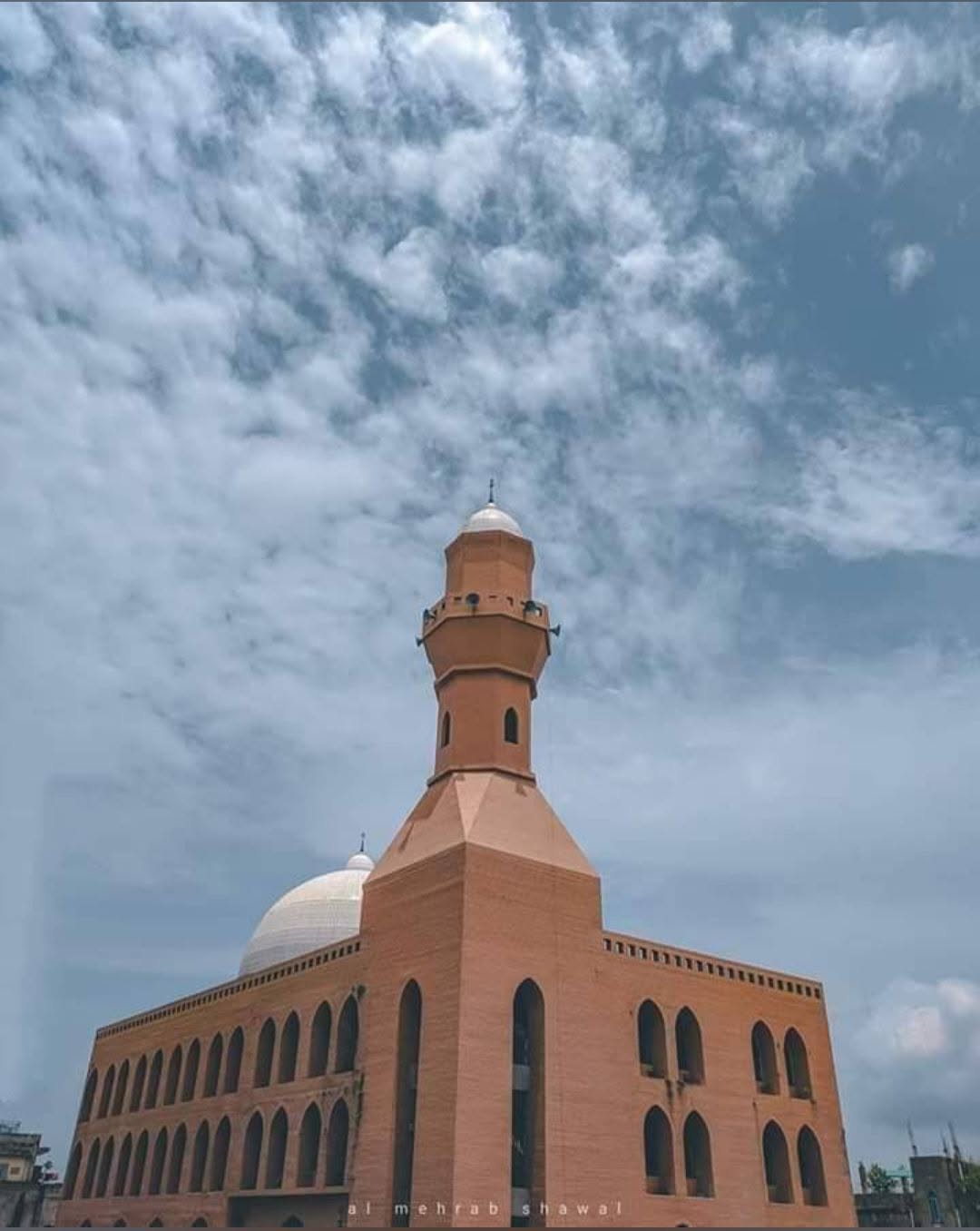
The dome and minaret of the madrasa beneath a bright Brahmanbaria sky
The dome and minaret of the Yunusia campus, Paikpara, Brahmanbaria.

A name carried forward

Independent biographical material on the founder remains scarce. He is not the same person as Haji Muhammad Yunus Choudhury, who would later found Befaqul Madarisil Arabia Bangladesh in 1978. Abu Taher Muhammad Yunus is remembered through the institution he left behind, and through the long line of teachers who taught in his name. Bengali sources name him simply as أبو طاهر محمد یونس — founder — beneath whose memory the madrasa has continued, uninterrupted, since 1914.

A note from the archive

Every fact on this page has been cross-checked against the English & Bengali Wikipedia, Banglapedia, The Daily Star, Ali Riaz's Faithful Education (Rutgers, 2008), and a 2021 University of Dhaka thesis on Hadith studies in Bengali. Anything we could not verify — including precise dates for the founder — is left unclaimed.
Chapter II · The Pillar

Fakhre Bangal —
the Pride of Bengal.

علامہ تاج الإسلام

Allama Tajul Islam · 1896 – 3 April 1967 · Muhtamim, 1926–1967.

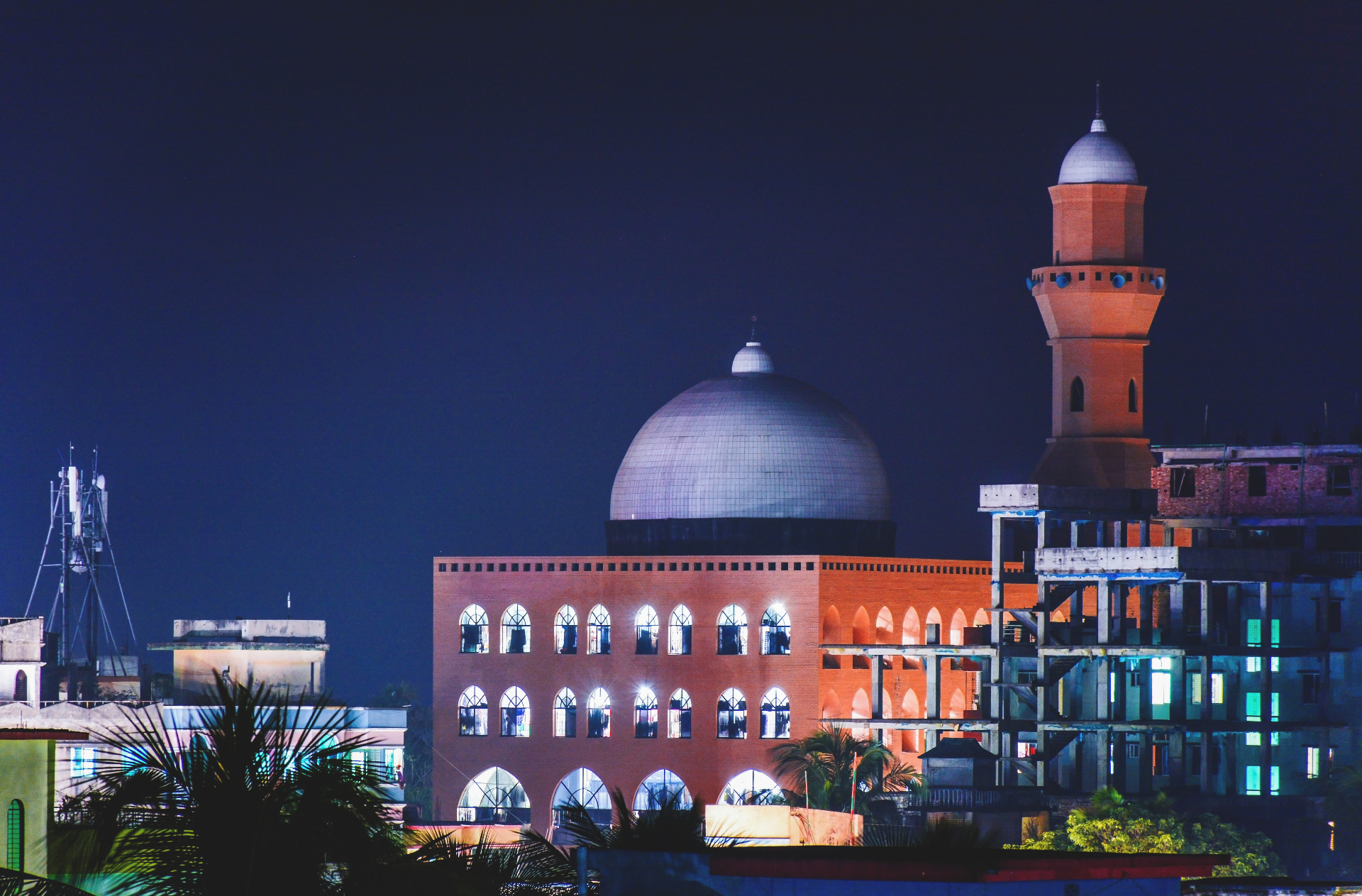
The Yunusia campus illuminated at night, where Allama Tajul Islam is buried
The campus where, in 1967, Fakhre Bangal was laid to rest.
Born
1896 · Bhuban
Father
Anwar Ali
Muhtamim
42 years

In 1926, aged thirty, a young scholar returned home to Brahmanbaria from Darul Uloom Deoband. He had studied Hadith under Anwar Shah Kashmiri, taken spiritual allegiance with Hussain Ahmad Madani, and sat in the lessons of Shabbir Ahmad Usmani, Izaz Ali Amrohi, Ibrahim Balyawi and Asghar Hussain Deobandi. Yunusia made him its Muhtamim.

For the next forty-two years he would remain in that office — as Director, as Shaykh al-Hadith, and as the institution's public face. He defeated polemicists across Delhi, Meerut, Saharanpur and Brahmanbaria, and was given the titles Raʾīs al-Munāẓirīn, Ḥāfiẓ al-Ḥadīth, and the one that endured: Fakhre Bangal — the Pride of Bengal.

In 1964 he travelled to Cairo as the sole delegate of East Pakistan to the World Ulama Conference, and there he rose, alone, against the proposal to create new schools of jurisprudence.

He had founded Anjuman-e-Hefazat-e-Islam in East Pakistan in the early 1950s and the regional Idara-e-Ta'limiyah education board for the greater Comilla–Sylhet madrasas. He sat as Vice President of the Nizam-e-Islam Party. Beyond Yunusia he established more than a dozen institutions across Brahmanbaria, Habiganj and Comilla — Anwarul Uloom, Tajul Uloom, Miftahul Uloom, Darul Uloom Islamia, the Kharki and Zaitshala madrasas.

When he passed, in Dhaka on 3 April 1967, his first janazah was led at Kakrail Mosque by Allama Sirajul Islam. He was carried home to Brahmanbaria and buried in the grounds of Jamia Islamia Yunusia. The maqbarah stands there still.

Education
Sreeghar madrasa → Jamia Qasimul Uloom, Bahubal → Sylhet Government Alia Madrasah (first division, AH 1337–38) → Darul Uloom Deoband (AH 1338–1342)
Spiritual Master
Shaykh al-Islam Hussain Ahmad Madani
Honorifics
Fakhre Bangal · Raʾīs al-Munāẓirīn · Ḥāfiẓ al-Ḥadīth · Faqr al-ʿUlamāʾ
Institutions Founded
12+ across Brahmanbaria, Habiganj & Comilla; Anjuman-e-Hefazat-e-Islam (1950s)
Chapter III · The Chronicle

A century, in milestones.

From a single Paikpara classroom in 1914 to the 2018 Act that recognised its capstone degree.

  1. 1914
    1332 AH

    The Founding

    Abu Taher Muhammad Yunus opens a small house of teaching in the Paikpara quarter of Brahmanbaria, in the Bengal Presidency of British India. The first appointed teacher, Motiur Rahman, sits with the first students over the classical books of Arabic grammar and jurisprudence. The institution will eventually take the founder's name.

  2. 1926
    1344 AH

    Tajul Islam Appointed Muhtamim

    Aged thirty, the Deoband-trained scholar Allama Tajul Islam — later titled Fakhre Bangal, the 'Pride of Bengal' — is appointed Director and Shaykh al-Hadith. He will hold the post for forty-two unbroken years.

  3. 1928–1935

    Shamsul Haque Faridpuri Teaches

    The future Mujahid-e-Azam, Shamsul Haque Faridpuri, serves as Principal — deepening the Yunusia line of Hadith pedagogy before leaving in 1935 to establish the Gazalia madrasa in Bagerhat.

  4. 1947

    Partition of Bengal

    Yunusia continues without rupture as Brahmanbaria becomes part of East Pakistan. Tajul Islam takes leading roles in the Jamiat Ulema-e-Islam, and later as Vice President of the Nizam-e-Islam Party.

  5. Early 1950s

    Anjuman-e-Hefazat-e-Islam

    Tajul Islam founds Anjuman-e-Hefazat-e-Islam in East Pakistan — a non-political religious body, and an ancestral inspiration for the later Hefazat movement of which today's Yunusia leadership remains central.

  6. 1964
    1384 AH

    Cairo, World Ulama Conference

    Tajul Islam travels as East Pakistan's sole delegate to the World Ulama Conference in Cairo, intervening — alone — against the proposal to create new schools of jurisprudence.

  7. 1967
    1387 AH

    Passing of Fakhre Bangal

    Allama Tajul Islam dies in Dhaka on 3 April 1967. His first janazah is led at Kakrail Mosque by Allama Sirajul Islam; he is then carried home to Brahmanbaria and buried in the grounds of the madrasa, where his maqbarah stands today.

  8. 1971

    Bangladesh's Birth

    Through the upheaval of the Liberation War the institution preserves its scholarly continuity as Brahmanbaria becomes part of the People's Republic of Bangladesh.

  9. 1978

    Befaqul Madarisil Arabia Founded

    The national Qawmi education board, with which Yunusia is affiliated, is formed in April 1978. Yunusia becomes one of its core member institutions.

  10. 1998

    Apex of the District

    Ali Riaz's Faithful Education (Rutgers, 2008) documents Yunusia as the institution overseeing the majority of madrasas in Brahmanbaria District — a quiet centre of Qawmi authority in greater Comilla and Sylhet.

  11. 2001

    The Fatwa Movement

    When the High Court restricts the issuing of fatwas, students nationwide rise in protest. Yunusia alumnus Mufti Fazlul Haque Amini leads the response and is elected MP for Brahmanbaria-2 (2001–2006).

  12. 13 Aug 2018

    Cabinet Recognition

    The Bangladesh Cabinet approves in principle the bill recognising the Qawmi Dawra-e-Hadith certificate at the level of a postgraduate degree in Islamic Studies and Arabic.

  13. 19 Sep 2018

    Parliament Passes the Act

    Education Minister Nurul Islam Nahid places the bill before Parliament. It is passed the same day — formally granting the Dawra-e-Hadith degree, long awarded at Yunusia, equivalence to a Master's in Islamic Studies & Arabic.

  14. 2 Nov 2021

    Sajidur Rahman Elevated

    Yunusia's Shaykhul Hadith, Allama Sajidur Rahman, is elected Senior Vice-President of Befaqul Madarisil Arabia and Co-Chairman of Al-Haiatul Ulya — the highest authorities in Bangladesh's Qawmi system.

  15. Today

    A Living Archive

    Under the Majlis-e-Shura and the current muhtamim Mufti Mubarakullah, with roughly 2,500 students and 56 academic staff, the institution carries its mission into a second century.

Chapter IV · The Hands

The lineage of the mashāyikh.

From the founder, through Fakhre Bangal, through Faridpuri — to today's Sajidur Rahman and Mufti Mubarakullah. The chain of hands that has kept the lessons of Yunusia unbroken for more than a hundred years.

01
Founder · 1914

Abu Taher Muhammad Yunus

أبو طاهر محمد يونس

Founder and namesake of the institution. Independent biographical sources remain scarce; he is remembered through the madrasa he established in Paikpara, planting one of the earliest seeds of Deobandi Qawmi learning in eastern Bengal.

02
Muhtamim 1926–1967 · Fakhre Bangal

Allama Tajul Islam

علامہ تاج الإسلام · فخر البنغال

Born 1896 in Bhuban village, Nasirnagar — son of the scholar Anwar Ali. Educated at Sylhet Government Alia Madrasah and then at Darul Uloom Deoband under Anwar Shah Kashmiri, Shabbir Ahmad Usmani, Izaz Ali Amrohi, Ibrahim Balyawi and Asghar Hussain Deobandi; spiritual disciple of Hussain Ahmad Madani. Forty-two years as Muhtamim and Shaykh al-Hadith. Founder of Anjuman-e-Hefazat-e-Islam and the Idara-e-Ta'limiyah regional board. Sole East Pakistan delegate at Cairo, 1964. Died 3 April 1967 in Dhaka; buried on the madrasa grounds.

03
Principal 1928–1935

Shamsul Haque Faridpuri

شمس الحق فریدپوری · مجاہد أعظم

Born 1896 at Gawhardanga, Tungipara. Trained at Mazahir Uloom Saharanpur and Darul Uloom Deoband (grad. 1927) under Anwar Shah Kashmiri and Hussain Ahmad Madani. After leaving Yunusia in 1935 he founded the Gazalia madrasa in Bagerhat and later, in 1951, the Jamia Qurania Arabia Lalbagh — teaching there until his death on 21 January 1969.

04
First Teacher · from 1914

Motiur Rahman

مطیع الرحمن

Recorded in the institution's own histories as the first teacher appointed by the founder, who sat with the earliest cohort of students over the foundational texts of grammar and fiqh.

05
Present Muhtamim

Mufti Mubarakullah

مفتی مبارک الله

The current principal, listed by Wikipedia and the institution's own materials as the present Muhtamim. He works alongside the Majlis-e-Shura council that has governed the Jamia since the founder's day.

06
Shaykhul Hadith · 1994–present

Allama Sajidur Rahman

علامہ ساجد الرحمن

Born 30 December 1964 in Bertala, Sarail. Admitted to Yunusia's preparatory class in 1973; completed Dawra-e-Hadith at Hathazari in 1984. Appointed Muhaddis at Yunusia in 1994 after returning from Qatar. Today: Senior Vice-President of Befaqul Madarisil Arabia (Nov 2021), Co-Chairman of Al-Haiatul Ulya, and Secretary General of Hefazat-e-Islam Bangladesh.

Chapter V · The Books

The Dars-e-Nizami.

The curriculum of Yunusia is the classical syllabus first set down in 18th-century India by Mullā Niẓām al-Dīn, adapted in Bengal as the Qawmi Madanī Niṣāb. Its capstone — the year of the Dawra-e-Hadith — culminates in the reading of Ṣaḥīḥ al-Bukhārī, and grants the Shahādat al-ʿĀlamiyya.

Recognised since 19 Sep 2018 as Master's-equivalent
Affiliated with Befaqul Madarisil Arabia Bangladesh

Hifz · Qira'at · Tajwid

Memorisation of the entire Qur'an with the classical disciplines of recitation in the Hanafi-Deobandi tradition.

Arabic Sciences

Nahw and Sarf — Mīzān al-Sarf, Naḥw Mīr, Hidāyat al-Naḥw, al-Kāfiya — followed by balāghah and classical Arabic literature.

Fiqh & Usul

Hanafi jurisprudence through al-Qudūrī, al-Hidāya, and al-Fatāwā al-ʿĀlamgīriyya; usūl through Nūr al-Anwār and al-Tawḍīḥ.

Dawra-e-Hadith

The capstone year: Ṣaḥīḥ al-Bukhārī, Ṣaḥīḥ Muslim, the four Sunans, Mishkāt al-Maṣābīḥ, the Muwaṭṭa — granting Shahādat al-ʿĀlamiyya, equivalent since 2018 to a Master's degree.

Tafsir & Aqidah

Jalālayn and Bayḍāwī in tafsir; Sharḥ al-ʿAqāʾid in kalām — the inherited theology of the Maturidi-Deobandi school.

Ifta — Specialisation

A post-Dawra specialisation that prepares muftis for the issuing of fatwas through al-Fatāwā al-Hindiyya and the contemporary nawāzil.

Chapter VI · The Sons

Sons of the Jamia.

Yunusia's alumni have led the Befaq, Hefazat-e-Islam, parliaments, and the great madrasas of Bangladesh. A partial register of those who carried its lessons outward.

  • 01

    Mufti Fazlul Haque Amini

    15 Nov 1945 – 12 Dec 2012

    Entered Jamia Islamia Yunusia as a child of nine. Continued his studies at Mustafaganj, Bara Katara, Lalbagh and Jamia Binoria Karachi (under Muhammad Yousuf Banuri). Chief Mufti and later Principal of Jamia Qurania Arabia Lalbagh; chairman of one faction of Islami Oikya Jote; Member of Parliament for Brahmanbaria-2 (2001–2006), winning with over 55% of the vote. Leader of Tehreek-e-Khatme Nabuwwat.

  • 02

    Shaykh al-Hadith Allama Sajidur Rahman

    b. 30 Dec 1964

    Admitted to Yunusia's Yazdham class in 1973. Today: Shaykhul Hadith of Yunusia (since 1994), Senior Vice-President of Befaqul Madarisil Arabia (since 2 Nov 2021), Co-Chairman of Al-Haiatul Ulya Lil-Jamiatil Qawmia Bangladesh, and Secretary General of Hefazat-e-Islam Bangladesh (confirmed 6 Jan 2022). Disciple of Shah Ahmad Shafi.

  • 03

    Shaykhul Hadith Allama Azizul Haque

    1919 – 8 Aug 2012

    Counted among Yunusia's notable alumni and teachers. First to translate the complete Sahih al-Bukhari into Bengali; founder of Bangladesh Khelafat Majlis; Vice Chancellor of Jamia Rahmania Arabia. Among those formed by Shamsul Haque Faridpuri's circle.

  • 04

    Shamsul Haque Faridpuri

    1896 – 1969

    A graduate of the Deobandi system who served as Principal of Yunusia (1928–1935). Founder of Jamia Qurania Arabia Lalbagh and the Gawhardanga madrasa; titled Mujahid-e-Azam, Sadr Saheb Huzur.

Chapter VII · The Image

The visual archive.

Photographs of the campus, the minaret, the lessons — a small visual record gathered for this tribute.

Chapter VIII · The Place

Visit the Jamia.

The campus sits in the Paikpara quarter of Brahmanbaria city, in Chattogram Division — a short journey from Dhaka.

Paikpara, Brahmanbaria
Brahmanbaria District · Chattogram Division · Bangladesh
23.9722° N · 91.1123° E
Open in Maps

A note on this archive

This website is an independent, non-commercial heritage tribute. It does not represent the official voice of Jamia Islamia Yunusia. Every claim here has been cross-checked against publicly available scholarship — the English & Bengali Wikipedia, Banglapedia, Ali Riaz's Faithful Education (Rutgers, 2008), The Daily Star, the 2021 University of Dhaka thesis by Ahsan Ullah, and Wikidata.

Fact-Check Ledger

Sources & citations.

Every section of this archive was written against the following materials. Where they disagree — they are flagged in the text itself.

  • Jamia Islamia Yunusia — English Wikipedia
    Institutional overview, founder, current leadership
  • Tajul Islam (scholar) — English Wikipedia
    Biographical core for Fakhre Bangal
  • Shamsul Haque Faridpuri — English Wikipedia
    Tenure as Principal (1928–1935)
  • Fazlul Haque Amini — English Wikipedia
    Biographical detail; entry to Yunusia at age nine
  • Sajidur Rahman — English Wikipedia
    Current Shaykhul Hadith; Hefazat & Befaq roles
  • Banglapedia — Faridpuri entry
    National Encyclopedia of Bangladesh
  • Ali Riaz, Faithful Education (Rutgers, 2008)
    1998 documentation of Yunusia's district authority (p. 150)
  • The Daily Star — Dawra-e-Hadith Master's status
    13 Aug & 19 Sep 2018 reports on the equivalence Act
  • Ahsan Ullah, Study of Hadith in Bengali Language (Univ. of Dhaka, 2021)
    Confirms Tajul Islam's 1926 appointment (p. 380)
  • Wikidata Q6146416
    Structured-data record for the institution